April 2, 2026
Bob Coleman
Executive Director, NASLB
SBA & USDA Expand Loan Guarantees: What Brokers Need to Know in 2026
Recent updates from both the USDA and SBA are significantly increasing federal loan guaranties, creating new opportunities for SBA loan brokers to place more deals, expand borrower eligibility, and improve approval rates across key sectors.
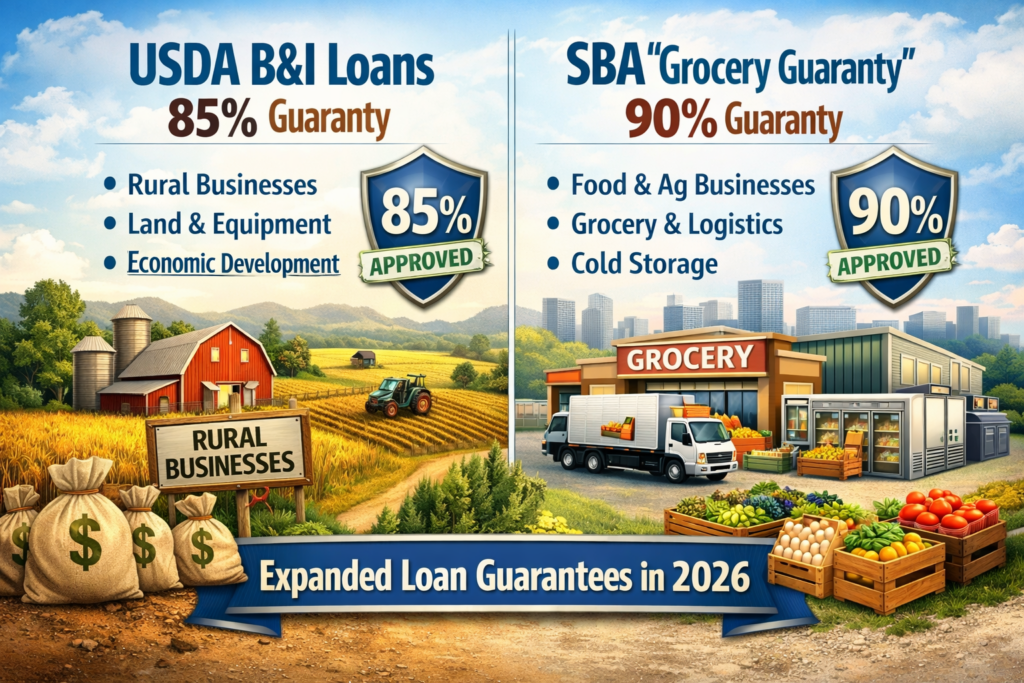
The USDA has increased its Business & Industry (B&I) loan guaranty to 85% for all loans approved in fiscal year 2026. This enhancement strengthens the program’s competitiveness with SBA 7(a) financing and makes it a more viable option for larger or rural-based projects that may not fit traditional SBA parameters.
To qualify, businesses must operate in rural areas with populations under 50,000, although company headquarters may be located in larger cities if the project itself is in an eligible area.
Eligible borrowers include for-profit and non-profit businesses, cooperatives, federally recognized Tribes, public entities, and individuals starting or expanding a business. Loan proceeds can be used for commercial real estate acquisition and development, machinery and equipment purchases, inventory and supplies, debt refinancing that improves cash flow and creates jobs, business acquisitions that preserve employment, and general business expansion or modernization. Applications are accepted on a rolling basis, providing consistent deal flow opportunities for brokers working in rural markets.
At the same time, the SBA is rolling out a major enhancement to its 7(a) program through a new 90% “Grocery Guaranty”, effective May 1, 2026. This initiative, tied to the International Trade Loan (ITL) program, targets small businesses across the food supply chain, including agriculture, food production, distribution, and logistics.
Eligible industries span a wide range of NAICS codes, including farming (crop and livestock production), fishing and aquaculture, agricultural support services, grocery and food wholesalers, farm supply distributors, supermarkets, and logistics providers such as refrigerated warehousing and specialized freight trucking. The goal is to expand access to capital for businesses that play a critical role in the nation’s food infrastructure.
For SBA loan brokers, the implications are immediate and material. Higher guaranty percentages—85% through USDA and 90% through SBA—reduce lender risk and increase flexibility in structuring deals. This allows lenders to stretch on credit, making previously marginal or declined transactions more financeable. Deals involving thin cash flow, seasonal revenue, or startup operations—especially within agriculture and food distribution—are now more likely to gain approval.
These changes also open new vertical opportunities. Brokers can deepen relationships in rural economic development through USDA B&I lending while simultaneously targeting food supply chain businesses under the SBA’s expanded guaranty program. Grocery stores, distributors, cold storage operators, and agricultural producers now represent a significantly stronger pipeline.
The bottom line: with federal guaranties reaching as high as 90%, 2026 presents a favorable environment for government-backed lending. For SBA loan brokers, this is a clear opportunity to revisit previously declined deals, expand into new industries, and increase overall loan volume.