December 11, 2025
Bob Coleman
Executive Director, NASLB
SBA’s Loan Limit to be Raised to $10 Million. Good News for Brokers!
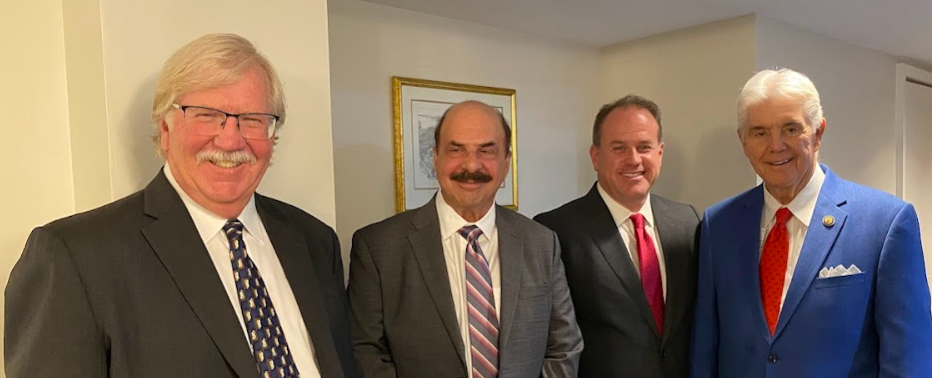
NASLB President David Marcantonio and Executive Director Bob Coleman met last week with Congressman Roger Williams, chairman of the House Small Business Committee, during the 18th Annual Secondary Market Summit in Washington, D.C. Their discussion reaffirmed that Congress is moving toward increasing the maximum SBA 7(a) loan size for manufacturing borrowers from five million dollars to ten million dollars. The House has already advanced the measure, and there is strong bipartisan support in the Senate. If the legislative schedule holds, the increase should be signed by the President and enacted by the SBA by the end of the first quarter of 2026.
The change carries major implications for brokers. Manufacturing loans account for approximately ten percent of all SBA 7(a) volume. With the higher cap, brokers will be able to originate significantly larger loan packages. Although lenders may see lower premiums on these larger guaranteed portions when they are sold into the secondary market, this development is not expected to affect broker referral fees. In fact, SBA is expected to encourage lenders to deploy more capital into manufacturing, which should make lending partners increasingly eager to review larger packages submitted by NASLB members.
At the Summit, Dianna Seaborn, Deputy Associate Administrator for the SBA Office of Capital Access, addressed the technical concerns raised by lenders and investors regarding the proposed change. Under current statute, the guaranty percentage remains fixed at seventy-five percent. Increasing the maximum loan to $10 million would raise the guaranteed portion to $7.5 million. That strip would then be sold into the secondary market, which is a size well above current norms. Seaborn noted that lenders have asked how these larger guaranteed portions should move into pools and whether splitting or multi-note structures should be permitted so that investors are not forced to take on a single large position.
Seaborn explained that SBA systems can support multi-note approaches and that similar structures exist in other federal programs. The outstanding issues involve determining who should execute the split at the lender level, through SBA, or through the Fiscal Transfer Agent, and how to accomplish this without adding operational burdens to lenders or reducing diversification for investors. She emphasized that rulemaking comes at the end of the process, not the beginning, and urged industry participants to provide feedback now while the framework is still being shaped. The goal is to design an approach that strengthens the program, supports lenders of all sizes, and keeps credit flowing to manufacturing firms.
Be sure to join us at the table next week for a presentation by Plains State Bank. Table membership for brokers is only $295 a year.